Why Treating the Source Matters More Than Treating the Symptom

When a patient walks into the clinic and points directly to where it hurts, it feels intuitive to focus your treatment there.
But what if that’s not actually where the problem is?
One of the most valuable lessons clinicians can learn is this: just because something hurts doesn’t mean that’s what you should treat. In fact, chasing pain can often lead you in the wrong direction entirely.
Understanding the “Pain Is a Liar” Concept
There’s an old osteopathic saying: pain is a liar.
What this means clinically is that the area producing symptoms is not always the root cause of the issue. Instead, pain is often the result of compensation… one structure working too hard because another isn’t doing its job.
If we only treat the painful area, we risk missing the real dysfunction.
A Simple Example: The TMJ
Take the temporomandibular joint (TMJ) as an example.
If a patient presents with pain on the right side, the instinct may be to treat that exact spot. But often, that painful side is actually overworking due to limited motion elsewhere.
- One side of the mandible may be hypomobile
- The other side compensates with excessive motion
- This leads to irritation, clicking, and pain
In this case, the solution isn’t to double down on the painful side, it’s to restore movement where it’s lacking so the overloaded side can calm down.
Explaining It to Patients (So They Actually Get It)
One of the biggest challenges isn’t just identifying the true problem, it’s helping patients understand why you’re not treating where it hurts.
This is where storytelling becomes incredibly powerful.
The Dishwasher Analogy
Imagine two kids are responsible for emptying the dishwasher.
- One kid does everything
- The other barely helps
The job still gets done, but the workload isn’t balanced.
Now, if you want to fix the problem, do you:
- Yell at the kid doing all the work?
- Or address the one who isn’t contributing?
Obviously, you focus on the underperforming sibling.
The same principle applies to the body. The painful structure is often the one doing too much, not the one that needs more attention.
Scaling the Concept: The Lumbar Spine
This idea becomes even more important when looking at regions like the lumbar spine.
With five vertebral segments working together, it’s common to see:
- One hypermobile segment (often painful)
- Surrounding hypomobile segments (often overlooked)
If we only treat the irritated segment, we’re missing the bigger picture.
Instead, improving mobility in the restricted segments allows the overloaded one to finally reduce its workload and settle down.
Why This Matters for Clinical Outcomes
When patients understand why you’re treating a different area than where they feel pain, everything changes:
- They become more compliant
- They trust the process
- They engage more actively in their care
And ultimately, treatment becomes more effective and efficient. Because you’re no longer just chasing symptoms, you’re addressing the system as a whole.
As clinicians, it’s easy to fall into the trap of treating what’s obvious. Pain is loud, attention-grabbing, and demands action. But better outcomes come from asking a deeper question:
What’s causing this structure to work too hard in the first place?
When you shift your focus to restoring balance, especially by targeting hypomobile or underperforming areas, you not only reduce pain, but you create more sustainable results.
Prefer to watch instead of read?
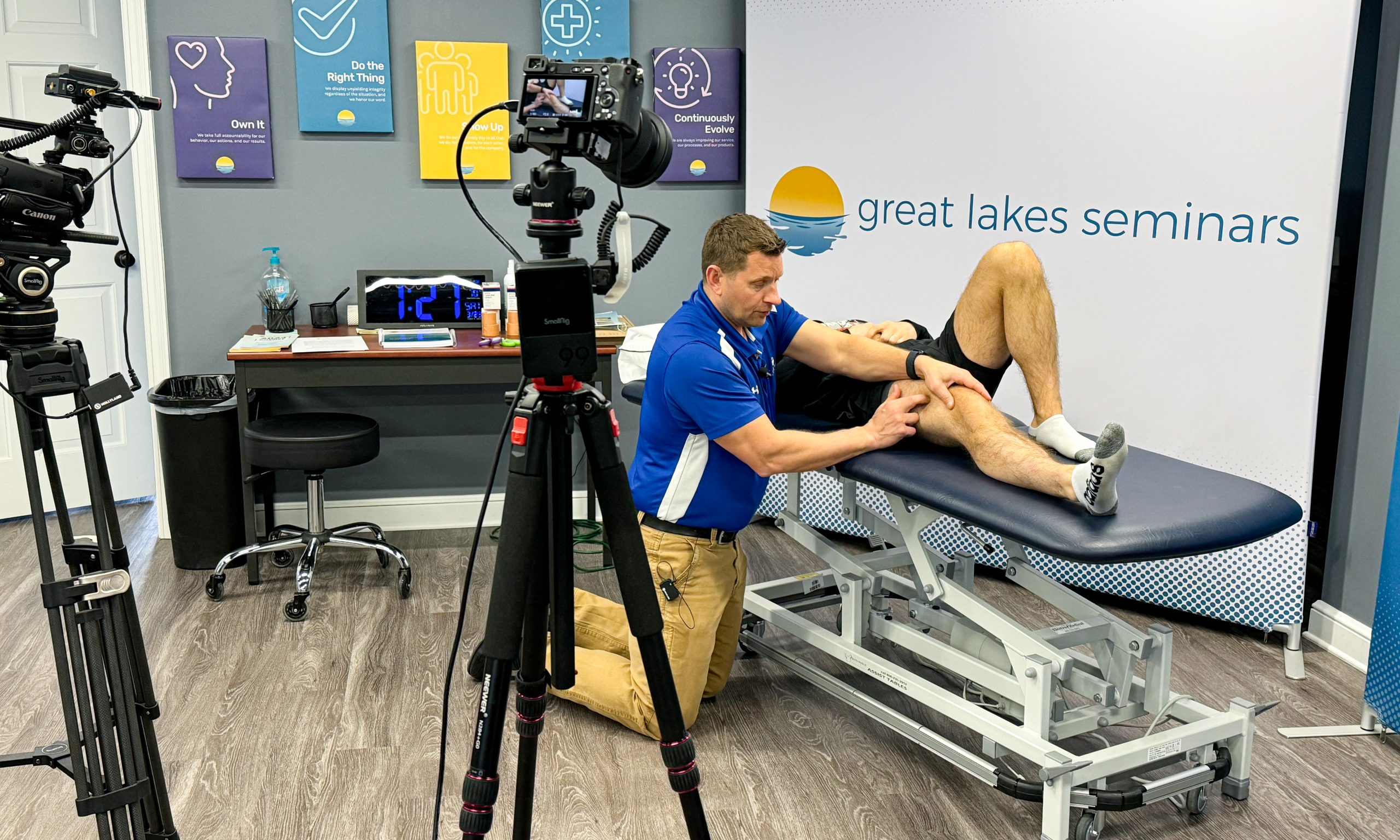
You can view the full Therapy Thoughts video featuring Marty Sytsema, where he breaks down why “pain is a liar,” how compensation patterns develop, and practical ways to explain these concepts to patients.

Instructor Behind Therapy Thought
Marty Sytsema
Martin completed his Masters in PT from Central Michigan University. Immediately following, he completed a two year residency in orthopedic manual therapy and was awarded a fellowship in the American Academy of Orthopedic Manual Physical Therapists in 2001. Marty was named 2012 Outstanding Alumni for the Central Michigan University PT program, and he was elected by his state peers to be the chairperson of the MPTA Reimbursement and Professional Standards committees starting in 2013. Martin is an owner of i’move which has multiple clinics in West Michigan.
Questions? Check out these FAQs!
Because pain is often the result of compensation. The painful area may be overworking due to dysfunction elsewhere, so treating it directly may not address the root cause.
It means that the location of pain doesn’t always indicate the true source of the problem. Clinicians need to assess movement patterns and identify underlying dysfunctions.
When a joint lacks mobility, nearby structures compensate by increasing their workload. This overuse can lead to irritation, inflammation, and pain.
Using simple analogies—like uneven workload between two people—helps patients understand why treatment may focus away from the painful area.
Share this article: